
Spinal Cord Stimulation (SCS)
Therapeutic Relief for Chronic Pain Sufferers
Spinal cord stimulation (SCS) provides therapeutic treatment of chronic neck, back, and extremity pain. Although the science of SCS has been around for almost 40 years, recent advances have improved this technology by prolonging battery life, making device components smaller, and improving pain control to multiple areas. Many chronic pain patients have regained function and vitality using SCS.
Video: Spinal Stimulators
Click below to view a video from our library about Spinal Stimulators.

SCS works by producing electrical impulses that block pain from being perceived by the brain. Pain is overshadowed by a mild tingling sensation. The success of spinal cord stimulation depends on (1) careful patient selection and (2) a successful SCS trial.
Careful patient selection is important to a successful outcome and may include a psychological evaluation, as SCS is not for all chronic pain patients. In general, a patient may be considered for this therapy if:
- Nonoperative treatments have failed
- Surgery is not an option
- Surgery is not expected to, or has not improved pain and symptoms
- The patient is addiction free (i.e. drugs)
Spinal Cord Stimulation Devices
Although there are different companies who manufacture these devices, the concept is similar. The device resembles a pacemaker and includes a generator, thin leads, and remote control. Basically, one or more thin leads are surgically implanted beneath the skin in the spinal canal and connected to the generator. Through the leads, low-level electrical impulses (Fig. 1) travel to the spinal canal and intercept pain signals before they reach the brain (Fig. 2). Instead of pain, you feel a mild tingling sensation. The remote control enables you to turn impulses on, off, or adjust their intensity.
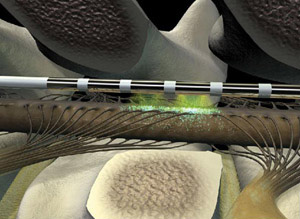
Figure 1. Thin lead implanted in the spinal canal produces low-level electrical impulses;
depicted by the green color (center of picture)
(Courtesy of Precision Plus? SCS system, Boston Scientific Corporation)
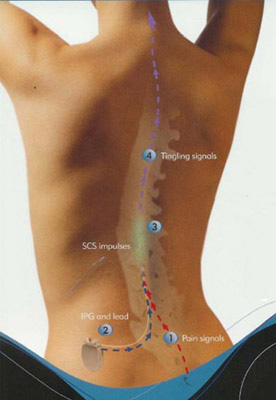
Figure 2. SCS intercepts pain signals before they reach the brain.
(Courtesy of Precision Plus' SCS system, Boston Scientific Corporation)
Implantation of a spinal cord stimulator, like other medical procedures, may present risks. Complications include risk of infection, bleeding, headache, allergic reaction, spinal fluid leakage, and paralysis.
SCS Trial
Before a spinal cord stimulator system is permanently implanted, you participate in a trial or test period to see if SCS sufficiently reduces your pain (i.e. 50%-70%). The length of the trial period may be 4 to 7 days (sometimes longer). The results of the trial help you to decide if you want the device fully implanted.
Instead of implanting the stimulator (with programmer and battery) beneath the skin, a temporary programmer is worn about your waist. A local anesthetic is injected and given time to take effect. Through a needle or small incision, the stimulator leads are implanted in the spinal canal, connected to the external generator, and secured in place to allow you to move about.
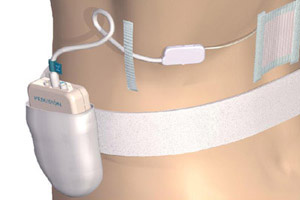
If your trial is deemed a success, then a permanent system is implanted at some point later (approx. 3-6 weeks). After the trial leads have been removed, the procedure is reversible.
Permanent SCS Implantation
The stimulator (generator) is surgically implanted either in your upper buttock or midback region depending on what is most comfortable. Similar to the trial, thin leads (Fig. 4, 5) are implanted in the spinal canal anchored against spine and connected to the stimulator pulse generator (programmer). Nothing is visible through the skin.
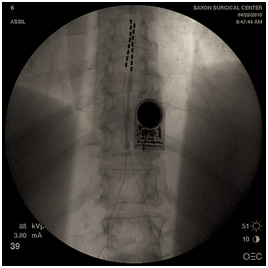
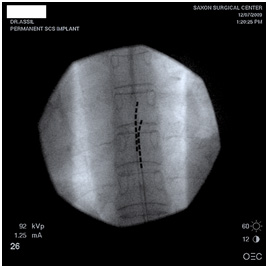
Figures 4 and 5. Thin leads implanted (Courtesy of Precision Plus' SCS system, Boston Scientific Corporation)
Like other medical procedures, you may experience some pain and swelling at the incision site and where the stimulator is implanted. This is normal and resolves in a few days.
Procedure Aftercare
Before you are released home, our medical team provides you with verbal and written home care instructions. In general, you should avoid lifting, bending, stretching, and twisting. Walking is encouraged to help relieve post-procedure pain and build strength. Within a week, we follow up with you to check your wound and to go over SCS programming options.
Conclusion
A member of our medical team will telephone you 24 to 48 hours after your procedure to follow-up. We recommend you keep a daily journal of your pain level and other symptoms following your procedure, whether you are undergoing a spinal cord stimulator trial or had the device permanently implanted. The pain diary will help you provide your doctor with detailed information about your treatment progress when you come back for your follow-up office visit.
Our multidisciplinary pain practice is
interventional and comprehensive.
Some Conditions We Treat
- Herniated Disc
- Peripheral Neuralgia
- Post Laminectomy Syndrome
- Spinal Stenosis
- Spinal Spondylolisthesis